
India's trade with West Asia saw a significant decline of over 28% in April, marking the second consecutive month of contraction. This downturn is attributed to severe shipping disruptions stemming from the ongoing conflict involving the US, Israel, and Iran, particularly impacting the crucial Strait of Hormuz waterway.

Indian benchmark indices, Sensex and Nifty, saw declines in early trade, influenced by rising crude oil prices and ongoing geopolitical tensions in West Asia. Experts suggest that crude oil remains a primary concern, with Brent holding near USD 88 a barrel due to renewed US warnings against Iran, embedding a geopolitical risk premium in energy markets. Track Sensex, Nifty

India's team management is considering pairing Vaibhav Sooryavanshi with Abhishek Sharma for the second T20I against West Indies due to Sanju Samson's poor form. While the middle-order has performed well, Samson's consistent low scores are a concern. The article also discusses potential changes in the pace bowling combination and the West Indies' need for a higher total.

India face West Indies in the T20 opener as Gautam Gambhir weighs a key selection call between Sanju Samson and teenager Vaibhav Sooryavanshi.

Shree Charani set a new T20I bowling rating record with 817 points, while Smriti Mandhana returned to the batting top five after starring in India's Asian Games triumph.

Shreyas Iyer scored his maiden T20 International hundred after a crucial two-hour troubleshooting session with former India batting coach Abhishek Nayar. Nayar revealed they worked on Iyer's grip, initial movements, and tactical nuances to help him generate more force and clear boundaries, addressing issues Iyer felt during the Asian Games. Iyer's 43-ball 102 not out led India to an eight-wicket win against West Indies on Tuesday.

Smriti Mandhana will lead the Indian women's T20 team in a three-match series against Zimbabwe in Raipur, marking the start of a new era. The series is crucial for India to address their T20 weaknesses in batting, fielding, and bowling, especially after recent World Cup exits, while Zimbabwe looks to build on their recent success.

Indian equity benchmark indices Sensex and Nifty experienced a significant tumble in early trade, primarily driven by elevated crude oil prices due to ongoing West Asia uncertainty and substantial foreign fund outflows. Track Sensex, Nifty on September 29.

Indian benchmark indices, Sensex and Nifty, experienced declines in early trade due to elevated crude oil prices, escalating US-Iran hostilities, and renewed concerns over a potential US interest rate hike.

Shreyas Iyer scored his maiden T20I hundred, leading India to a dominant eight-wicket victory over West Indies in the opening match of the five-match series. Despite recent travel and jet lag, Iyer's unbeaten 102, alongside a strong bowling performance including Naman Dhir's three wickets, ensured India chased down West Indies' total of 171 with ease. West Indies captain Shai Hope lamented his team's chaotic batting and lack of runs.

Teenage hammer thrower Anushka Yadav broke the meet record at the 65th National Open Athletics Championships in New Delhi on Saturday with a throw of 66.53m, surpassing the previous record held by Manju Bala. She dominated the event, with her closest competitor significantly behind.

West Bengal Chief Minister Suvendu Adhikari has assured the All India Football Federation of full government support to host India's biggest-ever international football fixture against five-time World Cup champions Brazil in Kolkata on October 3. This historic match will be India's first against a top-five FIFA-ranked nation, offering crucial exposure to the national team despite initial concerns over crowd management.

Non-resident Indians are increasingly investing in luxury homes in India, driven by geopolitical uncertainties, particularly the Iran war. This trend is observed across major cities like Mumbai, Bengaluru, and the National Capital Region, with developers noting a significant rise in NRI pre-sales. While some see it as a temporary shift, others believe India is becoming a stable, long-term investment destination for NRIs, especially those from West Asia.

Xi brought in asymmetrical power play by stating that India should have 'strategic cognition' and 'strategic judgement made on the basis of the stage of development the two countries are at'. This is a very nuanced way of asserting China's coercive diplomatic posture and reflects Beijing's penchant to unleash border instability at will, restrict rare earth metal exports, exert pressure on India at global and regional orders, asserts China expert Srikanth Kondapalli.

Saudi Arabia's East-West pipeline shutdown could make crude costlier for India as refiners face fewer supply routes and rising freight and insurance costs.

New Zealand pacer Lockie Ferguson believes the coming tour of New Zealand will present significant challenges and exciting opportunities for 15-year-old Indian cricket sensation Vaibhav Sooryavanshi, despite his impressive recent performances.

Shafali Verma smashed an unbeaten 100 off 49 balls against Bangladesh, becoming the first Indian woman to score an Asian Games century and strengthening her record-breaking 2026 T20I campaign.

Cricket legend Kapil Dev has cautioned against creating 'excessive hype' around 15-year-old Indian cricketer Vaibhav Sooryavanshi, drawing parallels with Vinod Kambli's career, and urged the media to give the young talent time to develop.

National selectors are set to convene in New Delhi to finalise India's ODI and T20I squads for the upcoming home series against West Indies, with Rishabh Pant's potential white-ball return and Hardik Pandya's fitness being the primary discussion points.

Naman Dhir's batting flexibility and useful off-spin could address a missing role in India's ODI setup, with Irfan Pathan highlighting his potential following a standout domestic T20 campaign.

Indian benchmark indices, Sensex and Nifty, recorded their fifth consecutive day of losses, driven by investor caution over rising oil prices due to West Asia tensions and renewed concerns regarding US trade tariffs.

The Indian women's cricket team is set to complete a 3-0 T20I series sweep against Zimbabwe in the final match in Raipur, buoyed by strong performances from captain Smriti Mandhana, Shafali Verma, and debutant Niki Prasad.

India's spin-bowling coach Sairaj Bahutule has indicated that Ravindra Jadeja's prospects for the 2027 ODI World Cup are strong, with his all-round skills being a crucial factor. The team is actively assessing various spin options, including Axar Patel, and using current series to experiment with combinations and fine-tune the squad for the upcoming showpiece event in South Africa, Zimbabwe, and Namibia.

Delhi Police have arrested 11 individuals involved in multiple "digital-arrest" scams, recovering over Rs 12 crore. The scams, linked to handlers in Southeast Asia, have affected 78 complainants nationwide, totaling Rs 73 crore. A retired scientist was defrauded of Rs 1.25 crore, with the entire amount frozen. The investigation uncovered a network arranging mule bank accounts and using cryptocurrency for commissions.

Iranian President Masoud Pezeshkian declared that Iran will not succumb to "bullying" from the US and Israel, vowing to protect national interests amidst escalating West Asian hostilities. During his visit to New Delhi for the BRICS summit, Pezeshkian also discussed strengthening bilateral ties with Prime Minister Narendra Modi and advocated for local currencies in BRICS trade, positioning Iran as a strategic energy and transport partner.
Indian benchmark indices, Sensex and Nifty, continued their downward trend for the fifth consecutive day, with the Sensex dropping 281 points and Nifty falling 78 points, primarily driven by surging crude oil prices and persistent geopolitical tensions in West Asia.

All-rounder Suryansh Shedge has been named as a replacement for the injured Hardik Pandya in the India A squad for the upcoming three-match one-day series against Australia A in Puducherry, with Pandya ruled out due to a fresh injury concern preventing him from bowling pain-free.
Indian benchmark indices Sensex and Nifty experienced a significant slump in early trade, driven by escalating tensions in West Asia and a sharp rise in crude oil prices, alongside a bearish trend in other Asian markets.
Indian equity benchmark indices, Sensex and Nifty, extended their losses for a second consecutive day, driven by elevated crude oil prices, persistent foreign institutional investor (FII) outflows, and high US Treasury yields.

BRICS nations have successfully reached a consensus on a joint statement following extensive negotiations, with India playing a crucial role in bridging differences, particularly among West Asian members like Iran, Saudi Arabia, and the UAE, despite regional conflicts and geopolitical tensions.

Airtel Africa's mobile payments arm, Airtel Money, has filed for an initial public offering (IPO) on the London Stock Exchange, with the International Finance Corporation (IFC) agreeing to purchase shares worth up to $90 million at the final offer price.

Indian companies' overseas expansion plans are holding strong despite geopolitical tensions in West Asia, driven by structural factors like supply-chain diversification, free trade agreements, and market expansion, according to Ajay Sharma, managing director and head of banking at HSBC India.

Indian stock markets experienced a significant downturn, with the Sensex plunging 1,124 points to a six-month low and the Nifty closing below 22,800, driven by surging crude oil prices, escalating geopolitical uncertainties, and weak global market trends.

Former India chief selector Chetan Sharma has voiced strong support for batting stalwarts Rohit Sharma and Virat Kohli, asserting that their talent and skills are beyond doubt. He believes the duo, set to return for the ODI series against West Indies, should continue playing for India as long as they perform, dismissing age as a factor. Sharma also expressed confidence in the Indian women's team winning gold at the Asian Games.

The Reserve Bank of India (RBI) has increased its GDP growth forecast for the current fiscal year (FY27) by 40 basis points to 7.1 per cent, acknowledging the resilience of domestic economic activity despite global headwinds and geopolitical tensions.
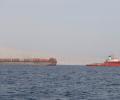
Crude oil prices reached a new record high in futures trade, both domestically and internationally, as escalating military tensions between the US and Iran in West Asia continue to fuel market volatility. Diplomatic efforts concerning the Strait of Hormuz are being closely watched for potential price stabilisation.

After India's 2-1 ODI series win over West Indies, Shubman Gill says it is time to settle the team's World Cup combination and reduce experiments.

India's batting strength, highlighted by centuries from Virat Kohli and Shubman Gill, is set to face the West Indies in the second ODI to seal the series. However, the team's pace-bowling combination remains a significant concern, particularly after the unsuccessful experiment with Nitish Kumar Reddy. The match is crucial for the West Indies, who are looking to keep the series alive and build confidence for upcoming World Cup qualifiers.

Maestro Virat Kohli and skipper Shubman Gill displayed their mastery in 50-over format with virtuoso hundreds as India subdued the West Indies by eight wickets in the first ODI in Thiruvananthapuram on Sunday.

VVS Laxman will lead India's support staff for the upcoming Zimbabwe T20I series and the Asian Games, providing a break for the senior team's regular staff. This arrangement allows for simultaneous international commitments, with Gautam Gambhir coaching the ODI squad against West Indies.
